Reliable
Insurance
Full liability for cargo in transit

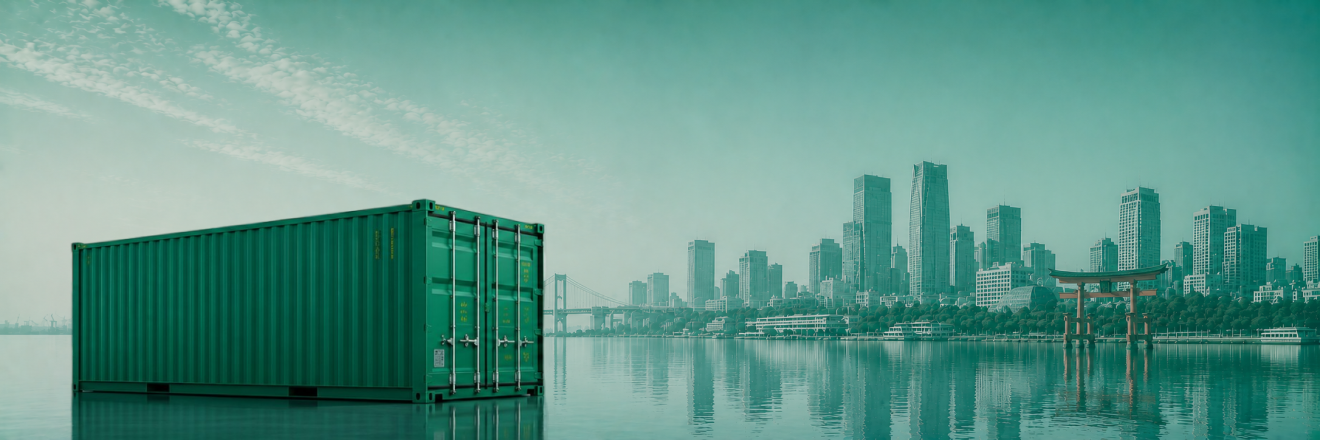
Japan remains one of the global leaders in the production of industrial equipment, electronic components, measuring instruments, auto parts, and specialty chemicals. TransGID organizes the full cycle of imports from Japan.
Many Russian enterprises continue to purchase Japanese goods due to high reliability, stable quality, and long equipment service life.
Today, shipments from Japan require thorough verification of export restrictions, accurate paperwork, and reliable international payment mechanisms. For many product categories, a key role is played not only by logistics, but also by proper preparation of export documentation even before the goods are dispatched.
We pick up cargo from the manufacturer, consolidate goods at warehouses, prepare export documents, carry out customs clearance, and deliver the cargo to the consignee's warehouse in Russia. If necessary, we arrange payments to suppliers and purchasing of goods under an agency scheme.
Most commercial shipments go by sea to Vladivostok with transshipment onto rail. We ship urgent cargo by air, and for certain product categories we use transit via international hubs.
The main route from Japan. The sea leg takes a few days; the average transit time shown is to the central part of the country.
Due to current restrictions, transportation is carried out via international transit hubs.
This approach allows building resilient supply chains while taking into account the requirements of the export legislation of the country of dispatch.
The choice of port depends on the manufacturer's location, product type, and available sea services.
We work only with commercial shipments for legal entities and individual entrepreneurs.
Main cargo categories:
For each category, TransGID specialists verify the requirements for transportation, customs clearance, and certification in advance.
The Japanese route requires precision in documents, settlements, and supply organization. We control all stages of transportation and take on the resolution of key foreign trade issues.
The main import flow goes via the Far East. We promptly reload containers onto railway platforms and reduce port dwell time.
We select HS codes in-house, file declarations, and clear cargo under the TransGID seal without involving third-party brokers.
We help arrange payments to suppliers in Japan and, if necessary, take on the purchasing of goods under an agency scheme.
For certain product categories, we use proven logistics chains, taking into account current export requirements and the specifics of international trade.
Separately, we handle cargo that requires temperature control and dangerous goods.
Some cargo requires temperature control during transportation.
We organize the delivery of dangerous goods from Japan.
The transportation format depends on the shipment volume: groupage cargo or a dedicated container.
If a shipment takes up several pallets, renting a dedicated container is not cost-effective. We pick up the goods from the supplier, deliver them to a consolidation warehouse, inspect the packaging, provide additional crating if necessary, and dispatch the cargo together with consignments of other clients.
This format is especially popular among marketplace sellers, online stores, and companies testing new product categories.
Dedicated containers are used for large shipments.
20-foot containers are suitable for heavy equipment, metal, and auto parts. For voluminous shipments, 40-foot containers and High Cube containers are used.
Japanese exports require careful document preparation even before the cargo is dispatched.
Our specialists:
International settlements remain one of the main tasks when working with Japanese suppliers.
Average transit times along the main routes:
Air freight (via transit hubs): 5–7 days to Moscow airports.
Direct ocean freight (Japan — Vladivostok): 5–7 days between ports.
Multimodal transportation (sea + accelerated train): 25–35 days from the Japanese port to a warehouse in central Russia.
Groupage cargo delivery (door-to-door): 35–45 days including cargo consolidation time.
No. TransGID works only with legal entities and individual entrepreneurs, handling commercial cargo shipments.
Yes. We accept cargo from different manufacturers at a consolidation warehouse and dispatch it as a single shipment.
Yes. If necessary, additional moisture-proof packaging, silica gel, and reinforced securing inside the container are used.











Cargo delivery from China: routes via Vladivostok, Novorossiysk, and Zabaikalsk

Cargo delivery from India: sea freight, LCL consolidation, air freight and product procurement

Cargo delivery from Turkey: direct import, transit of European goods, and financial logistics

Cargo Delivery from the UAE: Import, Export Control, and International Logistics

Cargo delivery from Thailand: sea freight, groupage cargo, air freight, and goods procurement

Cargo Delivery from Vietnam: LCL Groupage, FCL Sea Containers, and Air Freight

Cargo delivery from South Korea: sea, air, LCL shipments, and goods procurement

Cargo Delivery from Singapore: Electronics, Equipment, and Shipments via Asia's Largest Logistics Hub

Cargo delivery from Malaysia: sea freight, air freight, and financial logistics

Cargo Delivery from Bangladesh: Textiles, Clothing, Fabrics, and Container Shipping to Russia