

Task
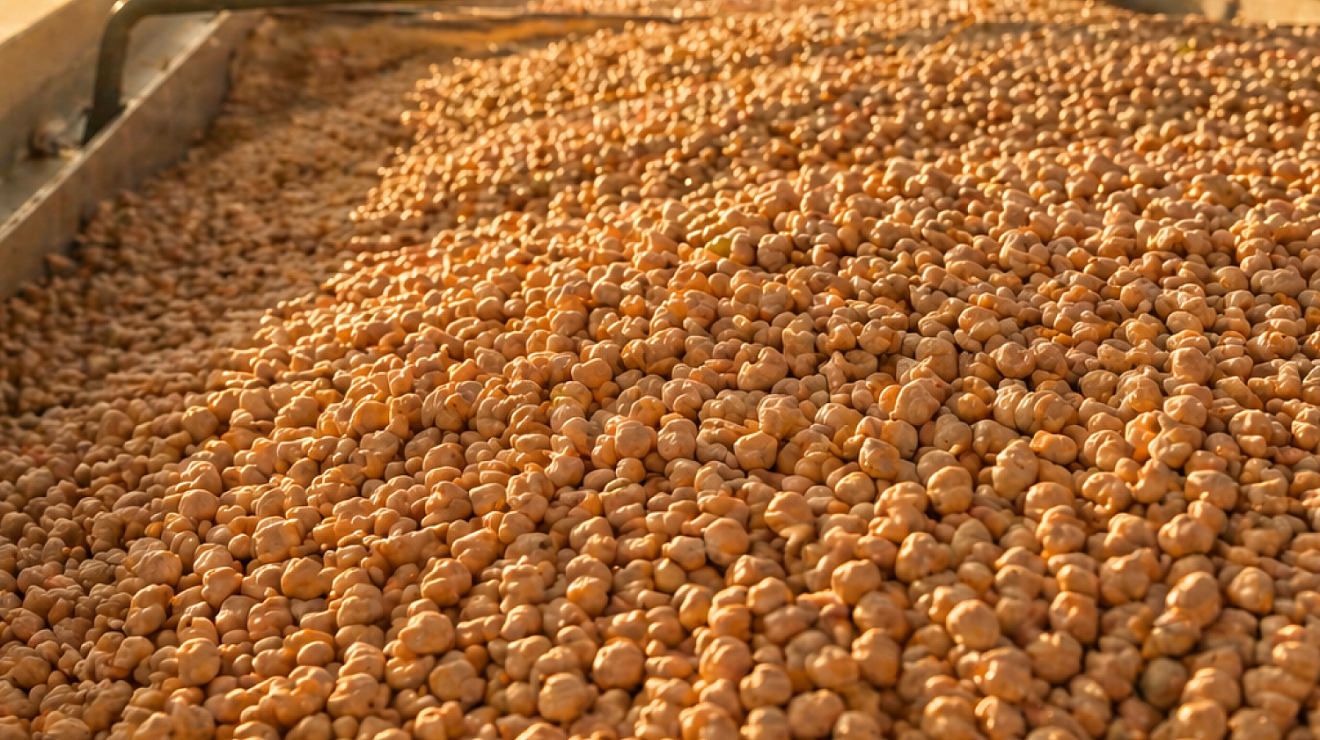
A Russian agricultural exporter submitted a request to export 297 tons of food-grade chickpeas (caliber 8–9 mm) to the Israeli port of Haifa under FOB Novorossiysk terms.
The contract had tight delivery deadlines, as the Israeli buyer supplied the legumes directly to the distribution centers of local retail chains. Logistics along this route are currently volatile: shipping lines face overbooking issues, and vessel space is confirmed just 5–7 days prior to departure.
A week before the planned loading cutoff, the vessel suddenly changed its port call window. If the containers had already entered the port area by that time, the client would have incurred invoices for demurrage and storage. In addition, it was necessary to undergo strict phytosanitary inspection, confirm product moisture content (not exceeding 13%), and properly draft the documents to clear foreign exchange control at the bank.
TransGID Solution
To accommodate the entire volume without exceeding permissible vehicle axle load limits, we decided to transport the chickpeas in bulk. Our logisticians selected 11 top-grade 20-foot containers (food-grade). We thoroughly inspected each container for the absence of foreign odors, industrial chemical traces, and residues from previous cargoes. Hermetic grain liner bags were installed inside, allowing us to safely load exactly 27 tons into each container.
The primary advantage in this transaction was our terminal in Novorossiysk. We received the full volume, loaded it, and kept it in safe storage at our facility without moving the containers to the port prematurely. Right at the warehouse, we organized sampling, successfully passed phytosanitary inspection, and obtained a laboratory certificate of conformity. As soon as the line confirmed the new vessel call window, we promptly rebooked the slot, submitted the export declaration, and dispatched the batch for loading.
Result
All 11 containers sailed to Haifa in a single shipment according to the updated schedule. Thanks to the use of our terminal, the client did not pay a single ruble for port detention or storage, smoothly overcoming the schedule shift. The loading proceeded seamlessly, and the documents, prepared in advance without any errors, allowed the client's accounting department to clear export foreign exchange control on the first attempt.