Reliable
Insurance
Full liability for cargo in transit

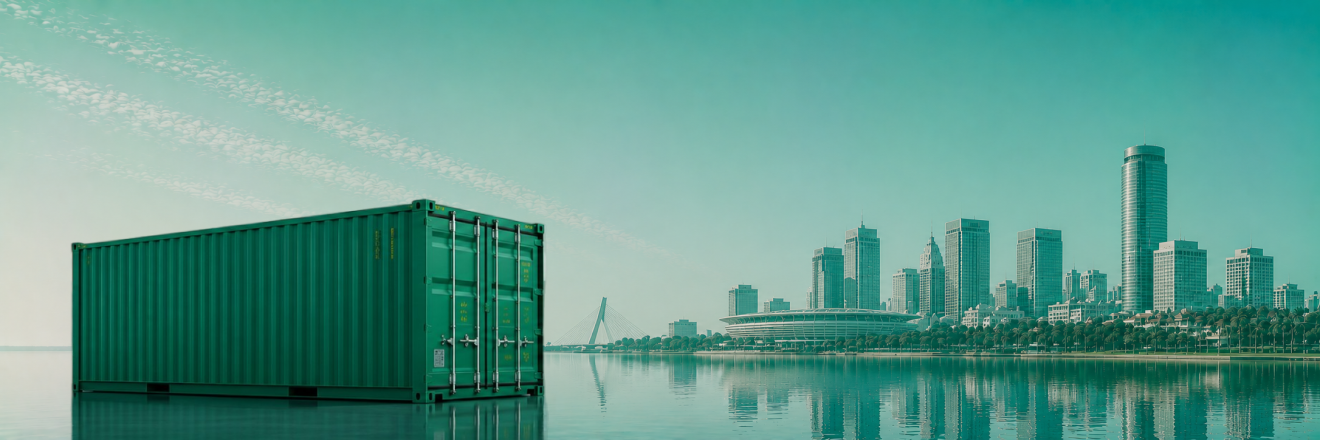
Africa remains one of the most underestimated markets for international procurement. TransGID arranges turnkey cargo delivery from Africa: from picking up goods from the supplier to customs clearance and delivery to the consignee's warehouse in Russia.
While most companies continue looking for suppliers in China, Turkey, and India, African manufacturers offer competitive prices on raw materials, agricultural products, equipment, and industrial goods.
We take care of international transportation, cargo consolidation, financial logistics, and support of foreign trade transactions.
When calculating the route, TransGID specialists factor in the supplier's location, shipping line availability, and the optimal delivery option to a Russian port.
Shipments from Egypt, Morocco, and other countries in the region are carried out via the Mediterranean Sea followed by calls at Russian ports. This is one of the fastest routes for sea freight import.
Shipments from South Africa require a longer sea leg.
Used for urgent deliveries of equipment, electronic components, spare parts, and product samples.
Just a few years ago, Africa was perceived as a challenging and niche destination. Today, the situation is changing.
In recent years, Russia's trade turnover with African countries has grown noticeably. Russian companies are actively developing cooperation with Egypt, Morocco, Algeria, Tunisia, South Africa, and other nations on the continent.
African nations provide access to unique product categories, competitive pricing, and new suppliers. For many companies, Africa is becoming not a substitute for China or India, but an additional sourcing market that allows diversifying imports and reducing reliance on a single region.
An added advantage remains the well-developed port infrastructure of North Africa and the availability of direct ocean services via the Mediterranean Sea and the Suez Canal.
Africa is not a single market. Each country specializes in its own product categories.
Russian companies also procure coffee, cocoa beans, nuts, food ingredients, industrial raw materials, chemical components, and goods for further processing from African countries.
The choice of the port of departure directly affects shipping costs and transit times.
The transportation format depends on the shipment volume and the regularity of deliveries.
Most companies start working with new suppliers with groupage shipments. A trial purchase of coffee, raw material samples, several pallets of textiles, or a batch of components rarely require renting a full container.
The client pays only for the space actually occupied, which significantly reduces logistics costs for smaller purchases.
Dedicated containers are used for regular shipments. This format is suitable for transporting food products, industrial raw materials, equipment, chemical products, and large consignments of goods.
The container is loaded directly at the supplier's facility and travels along the agreed route to a Russian port, which reduces the number of transshipments and allows better control over delivery times.
Before dispatch, a groupage shipment goes through consolidation and inspection at the warehouse.
TransGID is a licensed customs representative and handles the entire range of customs procedures independently.
Our specialists:
Arranging international payments remains one of the important tasks when working with African suppliers.
Routes from Egypt, Morocco, and South Africa differ significantly from each other. Therefore, for each shipment, we select the optimal transportation and customs clearance scheme.
Most cargo from North Africa arrives through Russia's southern ports. Our own infrastructure allows us to speed up container handling and cut storage and demurrage costs.
We help arrange international settlements with suppliers and, if necessary, handle goods procurement under an agency scheme.
We clear shipments ourselves under TransGID's seal without involving third-party brokers.
We monitor the route from the supplier's warehouse to the consignee's warehouse, including ocean freight, transshipment, customs clearance, and inland delivery across Russia.
The transit time depends on the country of origin and the selected route. Shipments from North Africa typically take 15 to 25 days, and from South Africa — 35 to 45 days. Air freight takes 3 to 7 days.
Typically, a commercial invoice, packing list, phytosanitary certificate, and documents confirming the origin of the goods are required. Our specialists verify the document set before the cargo is dispatched.
Yes. We arrange cargo consolidation and ship goods in a single batch, which helps reduce transportation costs.
No. We arrange shipments from various African countries, including Morocco, Tunisia, Algeria, Kenya, Tanzania, and other nations across the continent.
20-foot containers are typically used for heavy cargo, while 40-foot containers and High Cube containers are used for voluminous shipments.
Yes. If necessary, TransGID specialists arrange the transportation of temperature-controlled, dangerous, and oversized cargo. More information about these services is available on the relevant pages of the website.











Cargo delivery from China: routes via Vladivostok, Novorossiysk, and Zabaikalsk

Cargo delivery from India: sea freight, LCL consolidation, air freight and product procurement
Cargo delivery from Turkey: direct import, transit of European goods, and financial logistics
Cargo Delivery from the UAE: Import, Export Control, and International Logistics
Cargo delivery from Thailand: sea freight, groupage cargo, air freight, and goods procurement
Cargo Delivery from Vietnam: LCL Groupage, FCL Sea Containers, and Air Freight

Cargo delivery from South Korea: sea, air, LCL shipments, and goods procurement
Cargo Delivery from Japan: Sea, Air, Transit Routes, and Goods Procurement
Cargo Delivery from Singapore: Electronics, Equipment, and Shipments via Asia's Largest Logistics Hub
Cargo delivery from Malaysia: sea freight, air freight, and financial logistics