Reliable
Insurance
Full liability for cargo in transit

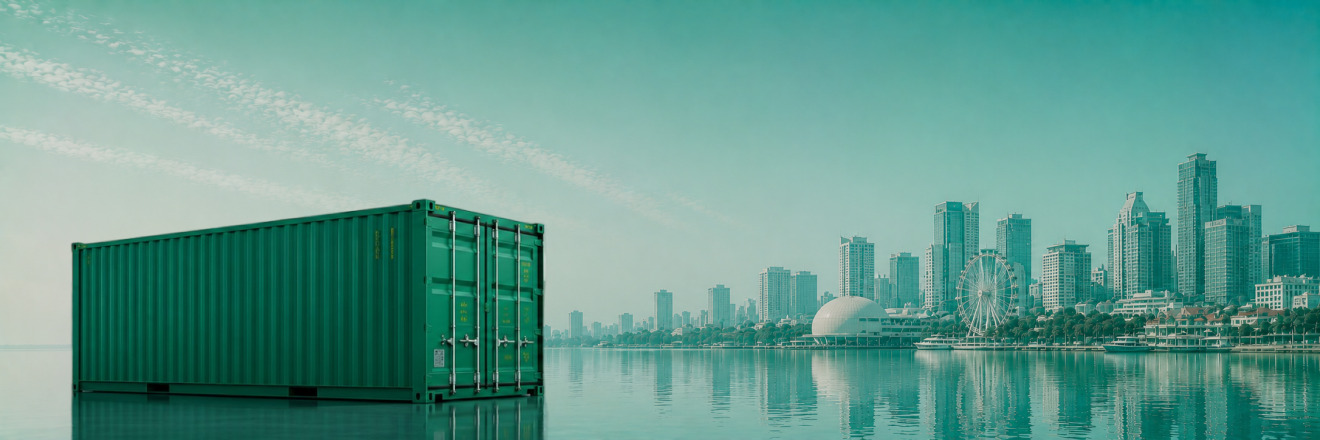
The Philippines is rarely among Russia's largest trading partners, but for certain industries, this country remains an important supplier of electronics, industrial raw materials, food ingredients, cosmetics, and manufacturing components.
TransGID arranges turnkey cargo delivery from the Philippines: from picking up goods from the supplier to customs clearance and delivery to the recipient's warehouse in Russia.
By sea, cargo travels via Vladivostok, Novorossiysk, or St. Petersburg; air freight is available for urgent shipments.
The main multimodal route.
The Philippines is one of the world's centers for the production of electronic components and telecommunications equipment.
In addition, the country actively exports food industry products, cosmetic ingredients, and industrial raw materials. Russian companies import from the Philippines:
For many product categories, the Philippines remains a niche yet stable supply source.
Most problems arise not during sea freight, but before the cargo is even dispatched.
The Philippines consists of more than 7 thousand islands, so logistics here starts not at the port, but with organizing domestic inter-island transportation, cargo consolidation, and preparing export documents.
Suppliers are often located on different islands and use different warehouses and transport companies.
Prior to export, it is necessary to arrange cargo consolidation, verify documents, and ensure timely delivery of the cargo to the port of departure. Special attention is required for international settlements and document preparation for customs clearance.
This is why delivery from the Philippines requires comprehensive support of the foreign trade transaction.
We help arrange payments to suppliers and, if necessary, take on the purchasing of goods under an agency scheme.
We clear cargo ourselves under the TransGID seal without involving third-party brokers.
We collect goods from multiple suppliers into one shipment and arrange dispatch as a single batch.
We accompany the cargo along the entire route — from the supplier's warehouse to the recipient's warehouse in Russia.
Most export cargo is shipped via Manila, Cebu, and Davao.
If a shipment takes up a few boxes or pallets, booking a dedicated container is economically impractical. We pick up the goods from the supplier, organize consolidation at the warehouse, inspect packaging, and assemble a common export batch.
This format is especially popular among importers of cosmetics, ingredients, marketplace goods, and companies testing new product categories.
Dedicated containers are used for regular shipments and large-volume purchases.
The container is positioned directly at the supplier's facility for loading. This helps reduce the number of transshipments, lower the risk of cargo damage, and maintain full control over the shipment along the entire route.
TransGID is a licensed customs representative and performs the entire range of customs procedures independently.
Our specialists:
Organizing international payments remains one of the key tasks when working with suppliers from the Philippines.
The average sea freight transit time is 25 to 50 days, depending on the route. Air delivery takes 5 to 7 days.
Yes. We arrange cargo consolidation and ship it as a single batch.
Yes. This is one of the popular cargo categories on the Philippines — Russia route.
Yes. We provide financial logistics services and handle international settlements.
No. With groupage cargo, the client pays only for the actual volume occupied, not the entire container.
20-foot containers are typically used for heavy cargo and equipment, while 40-foot High Cube containers are used for voluminous products, packaging, raw materials, and consumer goods.










Cargo delivery from China: routes via Vladivostok, Novorossiysk, and Zabaikalsk

Cargo delivery from India: sea freight, LCL consolidation, air freight and product procurement

Cargo delivery from Turkey: direct import, transit of European goods, and financial logistics
Cargo Delivery from the UAE: Import, Export Control, and International Logistics
Cargo delivery from Thailand: sea freight, groupage cargo, air freight, and goods procurement
Cargo Delivery from Vietnam: LCL Groupage, FCL Sea Containers, and Air Freight

Cargo delivery from South Korea: sea, air, LCL shipments, and goods procurement

Cargo Delivery from Japan: Sea, Air, Transit Routes, and Goods Procurement

Cargo Delivery from Singapore: Electronics, Equipment, and Shipments via Asia's Largest Logistics Hub
Cargo delivery from Malaysia: sea freight, air freight, and financial logistics