
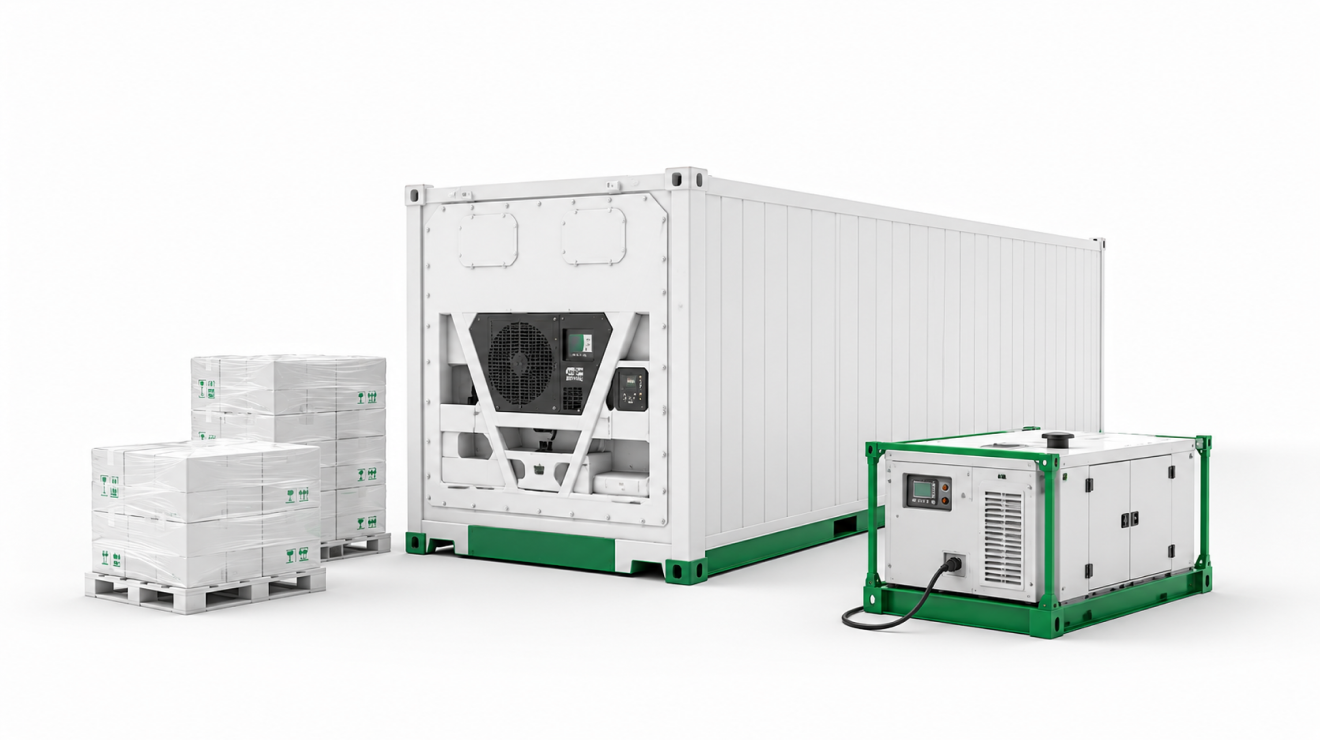

A batch of chilled meat was loaded into a reefer container straight from the production floor at plus eight degrees. The setpoint was set to minus one, as specified in the booking order. Twenty-four hours later, the refrigeration unit was still driving the temperature down, the return air sensor showed plus three, and at receiving, the cargo was rejected according to protocol. Formally, the equipment functioned properly. The error occurred twenty minutes before loading, when nobody verified the temperature of the cargo itself. Such failures at the ramp and in booking orders strike more often than equipment breakdowns. In its claims statistics, TT Club also attributes more than half of losses to documentation and settings rather than equipment failure. At the same time, cold chain logistics in 2026 has become more expensive faster than distance. Russian Railways tariffs for reefer containers have increased by 85% since 2021, with inflation around 51%.
Five checks before transport dispatch
Verify the equipment class against the required regime, cargo temperature against the setpoint, PTI validity period, temperature scale in the booking (Celsius or Fahrenheit), and in-transit temperature logging method. These five points cover most temperature-controlled cargo claims.
Order here is more important than completeness. The equipment class rules out obviously unsuitable transport in a minute, while cargo temperature at loading decides the trip's outcome more often than the unit's brand. The scale seems like a minor detail until the first time minus eighteen degrees Celsius turns into minus eighteen degrees Fahrenheit. TT Club provides another example: milk with a setpoint of 0.5 °C freezes if 0.5 °F (−17.5 °C) is set on the controller. Before sealing, make sure the display shows Celsius, ventilation below 0 °C is turned off, and the T-bar floor channels are clear. This is not a sixth check, but a way not to disrupt the selected regime at the loading ramp.
Who doesn't need a reefer and for whom it is not enough
A refrigerated vehicle is not required for every temperature-sensitive cargo. On a short haul during the cold season, when ambient outdoor temperatures remain naturally within the required corridor, an insulated body without a cooling unit is sufficient. An insulated body only preserves what was loaded into it, but it is cheaper and does not require an ATP certificate with a refrigeration class. In winter, some canned goods, potatoes, and cabbage are transported this way.
For small batches with a strict temperature window, an insulated container or thermal box with cooling packs is sometimes more cost-effective. Calculations must be made for the specific route, because the cost of a refrigerated container for a small volume outweighs the benefits.
The opposite boundary is stricter. Meat, fish, frozen goods, vaccines, flowers, and respiring fruit shipped off-season in an insulated van or in a dry container with styrofoam insulation almost always end in a claim. In spring 2026, the Russian Railways tariff difference between a dry and a reefer container from the Urals to the Far East reached 233%. A dry container cost about 113,000 rubles, while a reefer was nearly 264,000 rubles. Some shippers switched to styrofoam insulation because of this price gap. If your cargo is sensitive to bacteria or retail chain acceptance standards, such savings usually end up costing more than the freight rate itself.
There is also a third extreme. Pharmaceuticals, vaccines, biomaterials, and certain chemicals require not just cold, but a validated chain with equipment qualification, emergency protocols, and documented investigation of every temperature excursion. A standard reefer with a working unit does not meet this requirement, even if it physically maintains the required temperature.
If your cargo is subject to GDP requirements or the manufacturer's own temperature protocol, let us know prior to quote calculation. We will tailor the scheme to the protocol rather than to an average reefer. If the cargo tolerates a wider margin of ±2 °C, the trip is short, and the ambient temperature is close to the target range, first calculate an insulated van with us. A narrow corridor or multimodal transit with transshipments requires a reefer with an active unit and a genset on overland legs.
ATP classes and the temperature regimes they maintain
Russian classification of temperature-controlled transport originates from the Geneva Agreement on the International Carriage of Perishable Foodstuffs (ATP). The designations from there are still used in booking orders and certificates.
The letter code is read in two steps. The first letter indicates the equipment type, the second the insulation, and the third the temperature class. For insulated bodies, these are IN and IR; for standard-insulated reefers, the FN family; and for reinforced-insulation reefers, the FR family.
| Class | Temperature Range | Typical Cargoes |
|---|---|---|
| A | from +12 to 0 °C | Fresh vegetables, chocolate |
| B | from +12 to −10 °C | Dairy group, chilled meat |
| C | from +12 to −20 °C | Frozen foods, pharmaceuticals |
| D | not exceeding 0 °C | Chilled mode without freezing |
| E | not exceeding −10 °C | Frozen foods, semi-finished goods |
| F | not exceeding −20 °C | Deep freeze |
Classes D, E, and F maintain a single set temperature, not a range. Equipment of these classes is designed for already frozen cargo and is not obliged to pull down a warm batch to regime.
On Russian routes, FRC is most commonly used—that is, a reinforced-insulation reefer with a range from +12 to −20 °C. It covers both chilled and frozen categories, which is why carriers keep it in their fleet as a workhorse for both modes.
The ATP certificate and what it confirms
Since January 1, 2016, road carriers of perishable goods must obtain an ATP certificate for each vehicle. It is issued after testing at an accredited station. The list of stations is published by ASMAP, while ATP agreement functions for road transport are managed by FBU Rosavtotrans under the Ministry of Transport. The issuance procedure is established by Order of the Ministry of Transport No. 318 dated August 21, 2020, and for railway units by Order No. 154 dated May 18, 2021.
Testing measures the heat transfer coefficient of the body, K. For normal insulation, the standard is no higher than 0.7 W/(m²·K); for reinforced insulation, no higher than 0.4. Separately, they test whether the refrigeration unit can cope with the declared class at an ambient temperature of plus thirty degrees.
The certificate is issued for the duration of the test report, but no longer than six years, or for the duration of an expert review, but no longer than three years. An expired document means perishables cannot be carried in this vehicle, even if the unit is operating.
The certificate itself verifies the capabilities of the body and refrigeration unit, not the condition of the cargo. It does not guarantee that the shipment was not loaded warm or that the doors were not left open for half an hour at the ramp.
Reefer container, airflow, and genset
A refrigerated container fits the same external ISO footprint as a dry container, but inside it features thermal insulation, an evaporator, a compressor, and air ducts. Usable internal space is noticeably reduced.
A 40-foot High Cube has internal dimensions of approximately 11,998 × 2,284 × 2,509 mm, a volume of around 67–68.7 m³, a tare weight of 4,200–4,800 kg, and a payload capacity of approximately 26.5–30.5 t depending on the ISO code. The door opening is about 2,290 × 2,497 mm. Polyurethane foam insulation is 80–100 mm thick. We always obtain exact figures from the operator of the specific unit.
| Size/Type | Internal Volume | Payload Capacity |
|---|---|---|
| 20-foot, 22R1 | approx. 29 m³ | 26–27.5 t |
| 40-foot, 42R1 | approx. 56 m³ | approx. 28.5 t |
| 40-foot, 45R1 High Cube | 67–68.7 m³ | 29.9–30.5 t |
The operating range of standard commercial units is around −30…+30 °C. Maersk specifies the same corridor for standard 20-foot reefers and 40-foot High Cubes. Magnum extends the lower limit to −35 °C. Super Freezer units operate at −60…−10 °C for tuna and swordfish. Russian operators most often cite −30…+30 °C for Carrier, Daikin, and Mitsubishi, and down to −40 °C for Thermo King at ambient yard temperatures up to +50 °C. Power supply is three-phase, 380–460 V at 50 Hz.
Standard reefers cover frozen goods at around −18 °C, pharma at +2…+8 °C, and bananas at about +13.3 °C. Ultra-low temperature regimes below −35 °C are booked separately.
| Parameter | Reefer Container | Reefer Semi-Trailer |
|---|---|---|
| Air supply | Bottom-air delivery through T-bar floor | Top-air delivery, horizontal airflow |
| Box ventilation for fresh produce | Top and bottom | Sides |
| Typical leg length | Sea, rail, multimodal | Road, mostly regional trips |
| Standardization | ISO 20/40/45 ft | Dimensions according to national regulations |
Without an electrical outlet, the refrigeration unit will not run. On road legs and at unpowered yards, a diesel generator (genset) is mounted on the container. The standard marine plug is rated for 32 A and 380/440 V. According to Cargostore specifications, the unit consumes 5.8–11 kW. Genset capacity starts at approximately 10 kW, and a 460-liter tank lasts up to seven days at a consumption of about 3 l/h.
A genset is included in the quote as a separate line item: its cost depends on rental duration, mounting, dismounting, fueling, and diagnostics. Electrical plug-in at the port or terminal is calculated separately. These operations affect not only the freight rate, but also cold chain continuity.
The refrigeration unit maintains temperature, not cools the cargo
This explains what happened to that batch of meat. A refrigeration unit is designed to maintain the temperature the cargo already has. It lacks the cooling capacity to pull down several tons of excess heat from a warm shipment.
Standard practice is simple: cargo is pre-cooled to the target temperature in a warehouse cold room before transport arrives. The container or trailer body is pre-cooled separately while empty and before loading. If warm cargo is loaded, the internal temperature will spike, the unit will run at maximum capacity for hours, and readings upon arrival will deviate from the booking order.
Failure to pre-cool cargo causes a temperature spike in the initial hours of transit and remains one of the most common reasons for delivery rejection.
The second source of the same issues is stowage. In a marine reefer, air flows upward from the T-bar floor through the cargo. In a reefer semi-trailer, airflow is typically horizontal: air is discharged from the top of the unit and returns along the floor to the bulkhead. Cargo must not be stowed above the load line or bulk-loaded in a way that obstructs air ducts. Frozen goods are block-stowed tightly. In contrast, chilled respiring cargo requires air channels through the stow; otherwise, heat and ethylene accumulate in the core. Any blocked zone becomes a hot spot. To the untrained eye, this appears as an equipment breakdown, even though the unit operates flawlessly.
We check LCL/consolidated batches in a single semi-trailer for temperature compatibility, ventilation, odor, and ethylene sensitivity. Chocolate next to garlic is not a slide-deck joke, but a real-life insurance claim. A dual-temperature trailer with a partition works only if the seals are intact and sensitive cargo is placed in the front compartment with the higher-capacity unit.
The bar is higher for pharmaceuticals. Reefers are usually dispatched to the warehouse pre-conditioned (pre-warmed or pre-cooled) to the setpoint. Typical ranges are 2–8 °C and 15–25 °C. Since September 1, 2025, storage rules for medicinal products have been governed by Ministry of Health Order No. 260n dated April 29, 2025. If no special storage conditions are indicated on the packaging, the baseline regime is +15…+25 °C at relative humidity not exceeding 65%. For wholesale distribution, the order refers to EAEU GDP guidelines. Any recorded temperature deviation gives the consignee the right to reject the batch.
PTI and container acceptance for loading
PTI (Pre-Trip Inspection) is an automated system test carried out before releasing a container. It verifies the refrigeration machinery, sensors, temperature control and recording devices, defrost cycle, and air circulation. No shipping line will release a reefer container without a valid PTI.
PTI validity is not standardized across the industry. Different shipping lines set it between 30 and 180 days. In TT Club practice, 30 days is the standard benchmark. This should be clarified in advance, as an expired test requires re-inspection and leads to schedule delays.
A PTI inspects the machinery, but does not replace physical container inspection. It does not verify cargo temperature, interior cleanliness, power cable condition, door gasket seals, or drain kazoos. The automated test reflects equipment health at inspection time, whereas these physical aspects must be checked separately before loading.
Reefers are inspected across three levels of cleanliness:
- physical — absence of previous cargo residues, dirt, debris, and foreign objects;
- chemical — absence of detergents, oils, fuel, and foreign odors;
- microbiological — compliance with sanitary requirements for the specific cargo and its protocol.
During acceptance, we additionally check interior cleanliness and odors, door gasket integrity, condition of air ducts and floor grates, seal presence, and data logger operation. A persistent odor after fish or chemicals transfers to the next cargo, and washing it out within an hour at the loading dock is impossible. For pharma, we also require a sensor calibration certificate, renewed at least once a year.
Where the cold chain breaks
Freight insurer TT Club analyzes temperature-controlled cargo claims separately, revealing findings that surprise those who blame machinery. Temperature-sensitive cargoes rank third in terms of claim frequency in its portfolio.
About one-third of losses result from communication and paperwork errors, including Celsius vs. Fahrenheit confusion. Another 23% stem from incorrectly set temperature setpoints. Equipment breakdown accounts for only about a quarter of cases. Combining the first two categories shows that more than half of losses stem from paperwork and settings. Mechanical failure accounts for a smaller share than commonly believed.
The most vulnerable window in multimodal transit is the minutes and hours without power during port intake, stacking in the reefer yard, and loading aboard the vessel. TT Club highlights that this is where the temperature history of pharmaceuticals and high-value fresh produce most frequently breaks down. If your contract requires continuous power, we specify plug-in arrangements on every leg and maximum permissible off-power time in the transport instructions.
Hence our operational takeaways: state the setpoint in the booking in numerical format with the scale explicitly indicated. Read and record temperatures regularly. On vessels, reefer containers are inspected at least every six hours, recording supply and return air temperatures. Position data loggers so that data is accessible to both parties, not just the carrier.
The difference between supply and return air is diagnostic in itself. For frozen cargo, monitoring focuses on supply air; for chilled produce, on return air. A discrepancy usually indicates either overstacking beyond the load line or obstructed air circulation.
TransGID routes
TransGID standard reefer container solutions link Chinese origins, Russian ports, and overland legs directly to consignee warehouses. The specific routing depends on cargo type, temperature requirements, transit time, and terminal plug-in infrastructure.
- China → Vladivostok or Vostochny → rail or road transport → Russian regions.
- China → Novorossiysk → Southern Russia or central regions.
- China → Saint Petersburg → Northwestern Russia.
- China → Zabaikalsk or Kazakhstan → Moscow, Volga region, and Southern Urals.
- Russian ports and rail terminals → consignee warehouse.
Detailed routing options and delivery schemes are available on the TransGID refrigerated container transport page and in the China routes section.
How much cold chain logistics costs in 2026
There is no single flat rate for reefer transport: pricing is calculated based on the specific route and temperature liability regime. Freight rates depend on the route and distance, equipment type and container size, temperature range, genset requirements, terminal power connection fees, transshipment, and storage.
Quotes also incorporate cargo insurance and documentation, if required by the transit scheme. When comparing quotes, it is essential to clarify what is included in the base rate: reefer power along the entire route, port and rail terminal plug-in fees, genset lease, demurrage/detention, temperature monitoring, and ancillary services. Fuel surcharges, terminal charges, and equipment costs fluctuate, making quotes valid only for specific dates and routings.
Market trends and rate movements can be further tracked via reviews on Forbes and Logistics.ru. Their figures reflect specific dates and trade lanes and do not substitute a customized quote based on individual shipment parameters.
To calculate a quote, we require cargo details, temperature regime, weight and volume, route, transshipment points, transit time requirements, and documentation specifications. This ensures an apples-to-apples comparison of the final quote and the underlying scope of services.
What we request before calculating rates
To quote a refrigerated shipment without dockside surprises, we require a brief set of details: cargo description and required temperature setpoint with explicit scale; cargo temperature at loading and pre-cooling location; weight, volume, pallet count, and loading method; routing including transshipment hubs and power availability at each point; and temperature logging and receiving documentation requirements.
We also clarify whether the product has a proprietary manufacturer protocol or stricter shelf-life constraints. Under Technical Regulation CU TR 021/2011, products with a shelf life of up to five days are classified as perishable, with storage and transport conditions determined strictly by the manufacturer.
As of March 1, 2026, freight forwarders are also verified via the GosLog platform registry. The Ministry of Transport announced the registry rollout. Starting September 1, 2026, forwarding documentation transitions to electronic format; therefore, we agree in advance on exchange formats for booking orders, temperature logs, and delivery acceptance certificates. A paper copy of a temperature report that no one can sign at the port costs far more than it seems.
Send us these details, and we will provide a comprehensive quote indicating equipment type, ATP class, power supply scheme on every leg, and customer responsibilities. Cold chain logistics in 2026 is costly, and the largest share of extra expenses arises not from freight rates, but from rectifying shipments assembled at random.